Skip the Gimmicks: Durable Kitchen Countertops Built for Real Life

A gorgeous kitchen is fun until a splash of chili oil, a hot pan, and one overconfident lemon wedge start a tiny countertop crime scene. For serious home cooks, 2026 kitchen trends are less about “pretty for photos” and more about “can this survive Tuesday night dinner?”
The big theme is simple: kitchens are getting tougher and smarter. Countertops need to handle oil, heat, prep work, and cleanup without turning into a part-time job.
The best 2026 kitchens are built for real cooking
A kitchen that works hard has to handle mess without drama. Think seared steaks, red sauce, curry, cast iron, sheet pans, coffee splashes, and that one bottle of olive oil that somehow drips no matter what you do.
That’s why the Best kitchen countertops for heavy cooking in 2026 are the ones that balance stain resistance, heat tolerance, maintenance, and everyday comfort. Avid cooks don’t need a delicate surface that must be treated like museum glass. They need something that can take a little chaos.
Here’s the quick comparison.
Countertop material | Best strength | Watch out for |
Porcelain slabs | Excellent stain and heat resistance | Edges can chip if hit hard |
Engineered quartz | Very low maintenance and non-porous | Needs trivets for hot pans |
Granite | Strong natural heat resistance | Needs regular sealing |
Porcelain slabs are the low-drama workhorse
Porcelain is having a big moment because it checks a lot of boxes for cooks. It’s exceptionally dense, which makes it highly resistant to stains. Oil, wine, lemon juice, and tomato sauce generally stay on the surface instead of soaking in like gossip at a family barbecue.
It also handles heat incredibly well. That matters if the kitchen sees a lot of roasting, broiling, sautéing, and “oops, I put the pan there for two seconds.” Porcelain is fired at very high temperatures during manufacturing, which helps explain its heat tolerance.
The biggest perk? It never needs sealing. For anyone who already has enough calendar reminders, this is a beautiful thing.
Porcelain is especially good for:
Heavy oil use, like stir-fries, marinades, and shallow frying
Big baking days with hot trays moving around
Busy kitchens where cleanup needs to be fast
Modern designs with large, dramatic slab patterns
The main caution is edge impact. Porcelain is hard, but a heavy pot banging into an exposed edge can cause a chip. Basically, don’t treat it like a bumper car.
Engineered quartz keeps cleanup easy
Engineered quartz is popular for a reason. It’s non-porous, so cooking oils, sauces, and coffee don’t sink in. That makes it one of the easiest countertop materials to live with, especially if the kitchen is used every day.
Quartz doesn’t need sealing, and day-to-day cleaning is usually simple. Mild soap, water, and a soft cloth handle most messes. That’s great after a long cooking session when the thought of scrubbing feels personally offensive.
The tradeoff is heat. Quartz can be damaged by direct, prolonged heat because it contains resins that help bind the surface together. Translation: use trivets. Every time. Even if the pan “is only warm.” That’s how countertops get trust issues.
Quartz is a smart fit for:
Meal preppers who chop, portion, and pack all week
Families who need easy cleanup
Bakers who want a smooth, consistent surface
Cooks who use lots of oils and sauces
If heat is the main concern, porcelain or granite may be a better match. If low maintenance is the top priority, quartz is tough to beat.
Granite is still the traditional favorite
Granite isn’t new, but it’s not going anywhere. It has natural beauty, strong durability, and excellent heat resistance. A hot pan is less likely to bother granite than quartz, which is one reason many serious cooks still love it.
But granite has one big catch: it’s porous. That means oil can seep in if the surface isn’t properly sealed. For cooks who use olive oil, sesame oil, chili oil, butter, and sauces on repeat, sealing matters.
Most granite countertops should be resealed on a regular schedule, often about once a year, though the exact timing depends on the stone and the sealer. A simple water test can help. If water darkens the stone quickly instead of beading on top, it may be time to reseal.
Granite works well for:
Cooks who love natural stone
Kitchens with lots of hot cookware
Traditional and transitional styles
Homeowners who don’t mind annual maintenance
Granite is like a cast iron skillet. Beautiful, durable, and worth the care, but it does expect a little respect.
Island Prep Space For Kitchen Countertops

When you do a lot of heavy meal prep, continuous counter space is your best friend. In this recent project, the generous quartz countertops provide a massive, non-porous area for chopping, mixing, and serving. Notice the design: pairing light, natural wood tones with a deep, dark island base is a huge trend right now that adds warmth without sacrificing durability.
Bold Style Meets Easy Cleaning
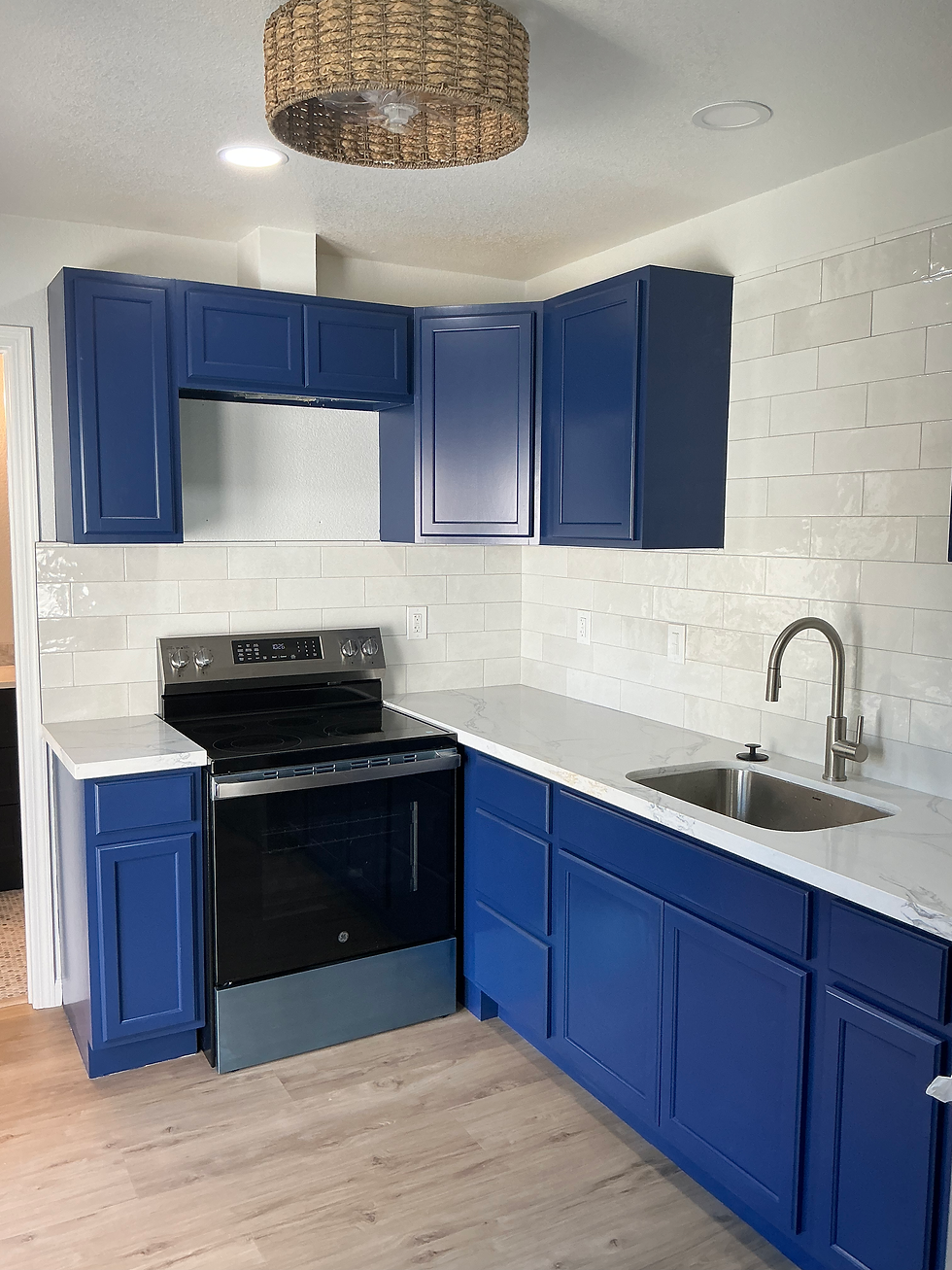
If you fry or sauté frequently, the area behind your stove takes a beating. In this kitchen, we paired a solid quartz countertop with a classic tiled backsplash. Unlike painted drywall, this combination makes wiping down rogue oil splatters completely effortless. Moving away from all-white kitchens, these vibrant blue cabinets are also fantastic for hiding everyday wear and tear.
Smart Space in Compact Layouts

You don't need a massive, open-concept floor plan to get serious prep space. By utilizing a peninsula layout here, we created extra surface area for cooking and casual meals. The continuous, light-colored countertops paired with sleek white shaker cabinets keep the footprint feeling bright, open, and immaculately clean.
Build a kitchen that can take the heat
The best 2026 kitchen choices are practical first, pretty second, and ideally both. Porcelain slabs are great for heat and stain resistance. Quartz is the easy-clean favorite. Granite still earns its place when sealed and cared for properly.
If a remodel is on the menu, plan the cooking zones before picking the shiny extras. Need help designing a kitchen that works as hard as it looks? Start planning your remodel with Preferred Construction Group.
FAQ
Is porcelain better than quartz for heavy cooking?
Porcelain handles heat better and resists stains very well. Quartz is also stain-resistant and easier to maintain, but it needs trivets for hot pans. For frequent high-heat cooking, porcelain has the edge.
Can cooking oil stain granite?
Yes, oil can stain granite if the surface isn’t sealed well. Granite is porous, so regular sealing helps protect it from oil, sauce, and other kitchen spills.
Should countertop choice come before appliance planning?
Yes. Countertops, outlets, appliance locations, and prep zones all work together. Planning them at the same time helps the kitchen feel natural when it’s time to cook.


Comments